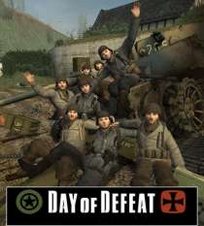
"... excessive computer game players showed classic signs of craving when they were presented with [game related imagery] from some of their favourite games – they desperately wanted to play, expected to feel better once they did, and fully intended to indulge again as soon as possible."
Would gamers stop if it gaming was outlawed?
Full article
Friday, November 18, 2005


Friday, November 04, 2005
Keeping the Door Open: Dialogues on Drug Use
I recently had the opportunity to attend an excellent conference in Vancouver entitled Beyond Drug Prohibition: A Public Health Approach
A significant paper was released during the conference by the Health Officers Council of British Columbia which outlined a rationale for a comprehensive system of drug regulation to replace the current criminalization "war on drugs" approach.
You can access the paper, A Public Health Approach to Drug Control in Canada, here
A significant paper was released during the conference by the Health Officers Council of British Columbia which outlined a rationale for a comprehensive system of drug regulation to replace the current criminalization "war on drugs" approach.
You can access the paper, A Public Health Approach to Drug Control in Canada, here
Thursday, October 06, 2005
Absurdities & Atrocities
Those who can make you believe absurdities can make you commit atrocities- Voltaire
Enjoyable Rant ... you've heard it all before, but it always bares repeating... read it like its poetry... it flows with a horrendous cadence.
Enjoyable Rant ... you've heard it all before, but it always bares repeating... read it like its poetry... it flows with a horrendous cadence.
Saturday, September 24, 2005
The Strange and Seedy Case of Marc Emery, Canadian
Article

From the Los Angeles City Beat:
“The whole business proposition was to raise money to start a revolutionary botanical movement to destroy the U.S. drug war and to stop this vicious gulaging that goes on with our people,” he says, adding, “So I was very good at what I do, ’cause the DEA noticed.”
- Marc Emery
From the Los Angeles City Beat:
“The whole business proposition was to raise money to start a revolutionary botanical movement to destroy the U.S. drug war and to stop this vicious gulaging that goes on with our people,” he says, adding, “So I was very good at what I do, ’cause the DEA noticed.”
- Marc Emery
Monday, September 05, 2005
How the Free Market Killed New Orleans
How the Free Market Killed New Orleans by Michael Parenti
In New Orleans there would be none of the collectivistic regimented evacuation as occurred in Cuba. When an especially powerful hurricane hit that island in 2004, the Castro government, abetted by neighborhood citizen committees and local Communist party cadres, evacuated 1.5 million people, more than 10 percent of the country’s population. The Cubans lost 20,000 homes to that hurricane---but not a single life was lost, a heartening feat that went largely unmentioned in the U.S. press.
Thursday, September 01, 2005
Friday, August 26, 2005
The war on whatever
The war on whatever
Any ol' war will do, eh? Let's face it. Canada is a frontline state ... errrr, I mean a neighbouring state... and neighbours are supposed to do what the neighbourhood bully wants, or else?
We will never be allowed to go independent, not without a fight.
Any ol' war will do, eh? Let's face it. Canada is a frontline state ... errrr, I mean a neighbouring state... and neighbours are supposed to do what the neighbourhood bully wants, or else?
We will never be allowed to go independent, not without a fight.
Juanes: Legalizing Drugs the Only Way Out for Colombia
Juanes is the biggest male pop star in Columbia, if not all of Latin America. He calls for legalization in an interview for a Spanish newspaper.
see interview and report in NarcoSphere
see interview and report in NarcoSphere
Wednesday, August 17, 2005
US reaction to Venezuela kicking out DEA
Here we go again. Uncle Sam says: We've only just begun!
US revokes Venezuelan military visas
"The measure came less than a week after left-winger Chavez ended anti-drug cooperation with the U.S. Drug Enforcement Administration after accusing its agents of spying, in the latest blow to relations between Washington and Caracas...
Following Chavez's announcement on the DEA, U.S. officials said his decision would influence next month's ruling in Washington [certification] on whether Venezuela had cooperated in the fight against illicit drugs."
More concise reporting from NarcoNews :
US revokes Venezuelan military visas
"The measure came less than a week after left-winger Chavez ended anti-drug cooperation with the U.S. Drug Enforcement Administration after accusing its agents of spying, in the latest blow to relations between Washington and Caracas...
Following Chavez's announcement on the DEA, U.S. officials said his decision would influence next month's ruling in Washington [certification] on whether Venezuela had cooperated in the fight against illicit drugs."
More concise reporting from NarcoNews :
On the one hand, the “de-certification” threat is a pathetic one, as it appeals to the old logic that a country had to bend over backwards to win approval from the U.S. in order to maintain international legitimacy. Chávez has been one of the principal people to break that trance, and such a move won’t faze him or his supporters. But read between the lines and there is the further threat of violence that Chávez has so often denounced and U.S. officials so indignantly dismiss. The United States has only ever denied counter-narcotics certification to two Latin American countries. One is Colombia. The other is Panama, and that certification denial was quickly followed by a bloody U.S. invasion.
Pain and Chemical Dependency: Addiction & Pain
Pain and Chemical Dependency: Addiction & Pain
This societal decision to regulate medical practice and criminalize the administration of opioid drugs in some contexts led to secondary phenomena, with effects of their own. Prescribers became increasingly concerned about the potential for investigation and sanction or prosecution. To some degree, this concern has contributed to the underuse of opioid drugs. Equally important, the criminalization of opioid addiction fostered an illicit drug trade that, in turn, brought new problems, including the involvement of organized crime and violent gangs in drug trafficking. Over time, all these problems--the undertreatment of pain, the occurrence of opioid abuse and addiction, and the criminal activities surrounding opioid trafficking--have increasingly undermined the public health. Clearly, pursuant to pain management and opioid analgesia, there is a pressing need for rational and consistant policies, initial and continuing education of healthcare professionals, and application of sound principles of assessment, prescribing, and management.
Saturday, August 06, 2005

Wednesday, July 27, 2005
Rigorous Intuition
If you don't find something that catches your attention at Rigorous Intuition then what the hell are you doing reading here?
Friday, April 16, 2004
Step in right direction... get drug offenders out of jails and prisons
Historic Drug Treatment Bill Waits for Gov's Signature in Maryland
Everyone has a stake in ending the war on drugs. Whether you’re a parent concerned about protecting children from drug-related harm, a social justice advocate worried about racially disproportionate incarceration rates, an environmentalist seeking to protect the Amazon rainforest or a fiscally conservative taxpayer you have a stake in ending the drug war. U.S. federal, state and local governments have spent hundreds of billions of dollars trying to make America “drug-free.” Yet heroin, cocaine, methamphetamine and other illicit drugs are cheaper, purer and easier to get than ever before. Nearly half a million people are behind bars on drug charges - more than all of western Europe (with a bigger population) incarcerates for all offenses. The war on drugs has become a war on families, a war on public health and a war on our constitutional rights.
Many of the problems the drug war purports to resolve are in fact caused by the drug war itself. So-called “drug-related” crime is a direct result of drug prohibition's distortion of immutable laws of supply and demand. Public health problems like HIV and Hepatitis C are all exacerbated by zero tolerance laws that restrict access to clean needles. The drug war is not the promoter of family values that some would have us believe. Children of inmates are at risk of educational failure, joblessness, addiction and delinquency. Drug abuse is bad, but the drug war is worse.
Everyone has a stake in ending the war on drugs. Whether you’re a parent concerned about protecting children from drug-related harm, a social justice advocate worried about racially disproportionate incarceration rates, an environmentalist seeking to protect the Amazon rainforest or a fiscally conservative taxpayer you have a stake in ending the drug war. U.S. federal, state and local governments have spent hundreds of billions of dollars trying to make America “drug-free.” Yet heroin, cocaine, methamphetamine and other illicit drugs are cheaper, purer and easier to get than ever before. Nearly half a million people are behind bars on drug charges - more than all of western Europe (with a bigger population) incarcerates for all offenses. The war on drugs has become a war on families, a war on public health and a war on our constitutional rights.
Many of the problems the drug war purports to resolve are in fact caused by the drug war itself. So-called “drug-related” crime is a direct result of drug prohibition's distortion of immutable laws of supply and demand. Public health problems like HIV and Hepatitis C are all exacerbated by zero tolerance laws that restrict access to clean needles. The drug war is not the promoter of family values that some would have us believe. Children of inmates are at risk of educational failure, joblessness, addiction and delinquency. Drug abuse is bad, but the drug war is worse.
Thursday, April 08, 2004
Safety First: reality-based approach to drug education
It's been said before, "the truth will set you free". That is the orientation behind honest drug education programs such as Safety First
As opposed to the same old shit that leaves the kids up the creek without a paddle of preventative education:
Just Say No Again: the old failures of new and improved anti-drug education
As opposed to the same old shit that leaves the kids up the creek without a paddle of preventative education:
Just Say No Again: the old failures of new and improved anti-drug education
Monday, February 23, 2004
Army Massively Multiplayer Project Interview ...
HomeLan Fed : Exclusives : Army Massively Multiplayer Project Interview : with Robert Gehorsam
As I noted, we are not designing a game so much as a large-scale, flexible and powerful environment that can be used for training and mission-rehearsal across a range of objectives. So unfortunately, it's probably a bit early to talk in detail about the gameplay. But simply put, the project will enable a commander of a unit to say, "Hey, my unit needs to train for its upcoming peacekeeping duties in Kumar." He works with a trainer to develop a specific environment and scenario (or better yet, modify an existing one out of a repository), figures out who is going to play the bad guys, the civilians and the "others" -- like the Red Cross, the UN, etc. -- and then prep his unit for the exercise. These exercises could last anywhere from a couple of days to months for all we're concerned, that's the beauty of an MMP, of course. And so at a certain time, the participants would start to show up. Bad guys would be given their assignments, good guys theirs, etc. and off they'd go. People play themselves, on the ground, interacting with their team, other units, civilians, the enemy, etc. It's not all combat by any means, there will be a lot of intelligence, patrolling, planning, collaboration, negotiation with civilians, etc. In many ways, MMPs do all of these things today, but each MMP today is highly specified for its particular entertainment and social goals. That's absolutely the right thing to do for a commercial product, but because There was always conceived of as a virtual world platform, it enables us to be more adaptive and general purpose. I expect there will be several dozen different styles of gameplay when this is up and running.
As I noted, we are not designing a game so much as a large-scale, flexible and powerful environment that can be used for training and mission-rehearsal across a range of objectives. So unfortunately, it's probably a bit early to talk in detail about the gameplay. But simply put, the project will enable a commander of a unit to say, "Hey, my unit needs to train for its upcoming peacekeeping duties in Kumar." He works with a trainer to develop a specific environment and scenario (or better yet, modify an existing one out of a repository), figures out who is going to play the bad guys, the civilians and the "others" -- like the Red Cross, the UN, etc. -- and then prep his unit for the exercise. These exercises could last anywhere from a couple of days to months for all we're concerned, that's the beauty of an MMP, of course. And so at a certain time, the participants would start to show up. Bad guys would be given their assignments, good guys theirs, etc. and off they'd go. People play themselves, on the ground, interacting with their team, other units, civilians, the enemy, etc. It's not all combat by any means, there will be a lot of intelligence, patrolling, planning, collaboration, negotiation with civilians, etc. In many ways, MMPs do all of these things today, but each MMP today is highly specified for its particular entertainment and social goals. That's absolutely the right thing to do for a commercial product, but because There was always conceived of as a virtual world platform, it enables us to be more adaptive and general purpose. I expect there will be several dozen different styles of gameplay when this is up and running.
Saturday, February 14, 2004
Videogame Theory - it's an academic question
Ludology.org - Videogame Theory
According to the Entertainment Software Association, 50 percent of Americans over the age of six play computer games, and the industry had $11.4 billion in sales in 2003, more than the film industry. Last year, 63 percent of U.S. parents said they planned to buy a video game.
So why shouldn't it merit serious academic attention?
Academics turn to video games
According to the Entertainment Software Association, 50 percent of Americans over the age of six play computer games, and the industry had $11.4 billion in sales in 2003, more than the film industry. Last year, 63 percent of U.S. parents said they planned to buy a video game.
So why shouldn't it merit serious academic attention?
Academics turn to video games
US engages in opium opportunism?
Nato happy to ignore explosion in Afghan opium output, says Russia
Another bumper crop is Afghanistan, warlords entrenched, and no election this summer - hey, that's business as usual.
Another bumper crop is Afghanistan, warlords entrenched, and no election this summer - hey, that's business as usual.
Friday, February 06, 2004
Free junk for junkies - a fix or folly?
Edmonton Journal - Story - canada.com network
Very informative article which appeared in several papers across Canada on January 25/04. The article describes serveral heroin maintenance programs worldwide, and how Canada is embarking on a pilot project of heroin maintenance in three cities. As well, a overview of the laws against opiates and the impact since late 19th century.
With maintenance being re-discovered in country after country, hardliners in the UN and the White House are doing their best to discredit the idea.
John Walters, the U.S. drug czar, attacked the British system in the Wall Street Journal last year.
"When British physicians were allowed to prescribe heroin to certain addicts, the number skyrocketed," Walters wrote. "From 68 British addicts in the program in 1960, the problem exploded to an estimated 20,000 heroin users in London alone by 1982."
This is deeply deceptive, says Fazey. Not only had the British system been in place for decades before 1960 without any increase in addiction, it was effectively dead "by about 1972."
Very informative article which appeared in several papers across Canada on January 25/04. The article describes serveral heroin maintenance programs worldwide, and how Canada is embarking on a pilot project of heroin maintenance in three cities. As well, a overview of the laws against opiates and the impact since late 19th century.
With maintenance being re-discovered in country after country, hardliners in the UN and the White House are doing their best to discredit the idea.
John Walters, the U.S. drug czar, attacked the British system in the Wall Street Journal last year.
"When British physicians were allowed to prescribe heroin to certain addicts, the number skyrocketed," Walters wrote. "From 68 British addicts in the program in 1960, the problem exploded to an estimated 20,000 heroin users in London alone by 1982."
This is deeply deceptive, says Fazey. Not only had the British system been in place for decades before 1960 without any increase in addiction, it was effectively dead "by about 1972."
Sunday, February 01, 2004
Subscribe to:
Posts (Atom)